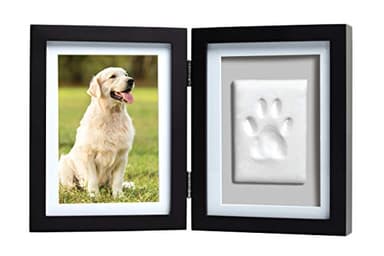
1. Take a paw print, if you still can.Clay imprint kits are cheap and take minutes. It has to happen while they’re here or right after, so it’s the only item on this list with a clock on it. If you missed the window, ask your vet — ink prints are often kept on file, and crematoriums frequently take one as standard.
2. Print the photos.Free, and the most common regret we hear is that everything stayed on a phone. Pick twelve pictures and get them printed — a small album, a photo book, or a set of prints in a drawer for the days you want them. Digital photos vanish behind a search bar; printed ones get looked at.
3. Frame the collar.A shadow box with the collar, the tag and one photo is the single most-loved homemade memorial there is, because it holds the object you can’t bear to throw away and can’t bear to see lying around. It costs the price of a box frame.
4. Plant something.A tree, a shrub, a rose — ideally something that flowers around the time they died, so the anniversary arrives with something to look at rather than only a date. If you rent, a large pot works and moves house with you.
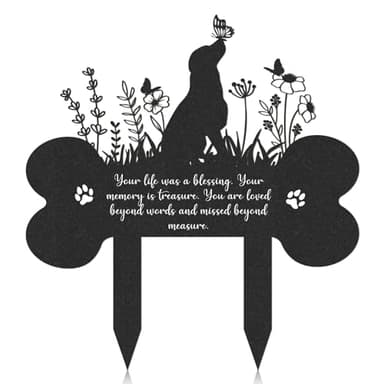
5. Mark the spot. A garden marker or memorial stone gives grief a destination, which is a surprisingly practical thing to have. It also makes the tribute legible to other people in the house, especially children, who often want somewhere to go and say something. The two shapes work differently: an engraved garden stone sits flat and weathers in place, which suits a spot the dog actually used, while a marker stands up and stays visible once planting grows in around it. Either only makes sense if the person owns the ground — for a renter, choose something portable instead.
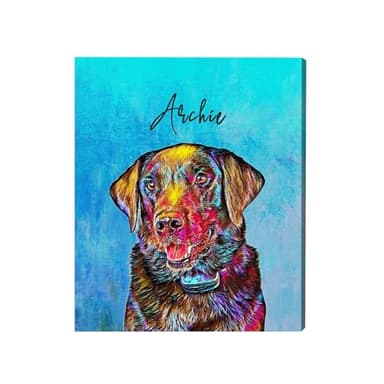
6. Commission a portrait. A painted or line-art portrait from a good photo is the memorial most people end up displaying permanently, because it reads as art rather than as a memorial. Our custom dog portrait guide covers the styles, and how to order one explains which photo works.
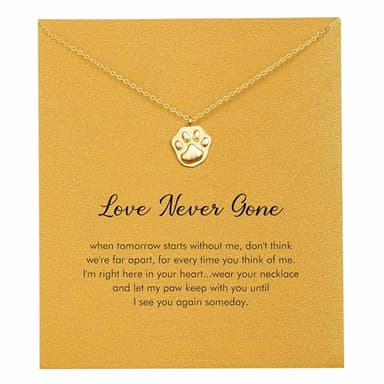
7. Wear them.A pendant engraved with their name, a paw-print charm, or a cremation piece holding a small portion of ashes. This suits people who want the memorial with them rather than on a wall — see dog memorial jewelry for the options and what to check before ordering.
8. Decide about the ashes when you’re ready.Keeping them, scattering them somewhere they loved, burying them under a planted tree, or splitting a small portion into a keepsake are all normal. So is leaving the box on a shelf for two years because you can’t decide. Check local rules before scattering on public land, a beach or a park.
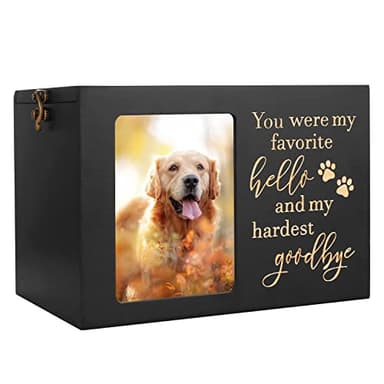
One practical note nobody warns people about: ashes usually come home from the crematorium in a plain plastic tub or a cardboard sleeve with a printed label, and a lot of owners find that harder to look at than they expected. A wooden urn box with a photo frame in the lid is the usual answer, and the better ones hold the collar and tag as well, so everything that came back lives in one place. Two cautions if you are buying one for somebody else rather than yourself: only do it if you know they kept the ashes, and check the stated capacity against the size of the dog, because boxes are sold by volume and a large breed needs a bigger one than the default listing photo suggests. Moving ashes across is a hard afternoon — most people want to do it alone.
9. Hang an ornament each year.A dated or named ornament turns the first Christmas — which is genuinely hard — into a small annual ritual instead of an ambush. Our rainbow bridge gifts page covers keepsakes in this register.
10. Give in their name.A donation to the rescue you got them from, or a shelter’s medical fund, converts grief into something that acts. Some rescues will add a name to a kennel plaque or a wall for a modest donation, which combines this idea with idea five.
11. Write it down.Not a formal eulogy — just the list of things only you know. The noise they made when you got home. The one food they’d steal. Where they slept in summer versus winter. Memory blurs faster than anyone expects, and this page of notes becomes the thing you actually reread.
12. Keep one ordinary thing in use. The blanket that stays on the sofa, the tennis ball on the shelf, the leash still on its hook for a while. Not everything has to be ceremonial. Some people find far more comfort in one unremarkable object staying exactly where it always was.