Paw & Present

Personalized · How-To

How to Make a Dog Paw Print

Clay for a keepsake you can hold, ink or paint for a print you can frame and copy. Step by step for both, with the safety notes from vets and pet poison lines.

By Stephen V., Founder & editorLast updated September 18, 2026

Paw & Present is reader-supported. We may earn a commission from links on this page, at no extra cost to you, and prices are live and can change. How this works.

A paw print is the one keepsake that comes from the dog itself rather than from a photo of the dog. It takes a few minutes of the dog’s time and can be done at the kitchen table. The only real decision is which kind you want, because people mean two quite different things by “paw print,” and they need different supplies.

If you want something to hold or hang, use clay. Pressing the paw into soft clay gives you a three-dimensional impression — the pads, the toes, often the nails — that sets into an object: an ornament for the tree, a round keepsake, or an insert that sits in a frame beside a photo. You need the clay, a smooth surface, something to roll it with, something to cut a shape, and a little patience, since air-dry clay takes a day or two to set. There are three kinds of clay. No-bake air-dry kits, like Pearhead’s, come with everything and need no mixing or oven. Oven-bake clay is what many veterinary hospitals use for the prints they make, and it sets in a short bake. Homemade salt dough is the from-scratch option, and the one with a real safety problem for dogs, which is covered below.

If you want something flat to frame, copy or turn into artwork, use ink or paint. Coating the pads and pressing them onto paper gives the crispest outline of the paw, and a flat image can be framed, scanned, printed again for family, shrunk down for a locket, or handed to an engraver or a tattoo artist. You need a nontoxic, washable ink pad or paint, some cardstock, a damp cloth, and somewhere you don’t mind a mess. If the mess is what puts you off, inkless wipe kits print onto specially treated cards without any ink touching the paw.

If you can, do both in one session. The hard part of either method is having a calm dog, a helper and the treats out at the same moment. Once you have that, an ink print takes only a couple of extra minutes: clay for the shelf, and a flat print for the copies and anything you decide to make later.

If you are buying for someone else, think about who holds the dog. A paw-print kit is a gift the recipient finishes themselves. That is lovely for a household you are part of, and much harder to pull off as a surprise. If you can’t get near the dog, give the kit with an offer to help, or skip the print and choose something that only needs the dog’s name. Our personalized dog ornaments guide ranks those options by what each one asks of you.

The three picks below follow that logic. Our top pick is the Pearhead frame and clay imprint kit: a wooden frame that holds a photo beside a no-bake clay print you take yourself, so the finished piece goes straight onto a shelf. Second is Pearhead’s paw-print keepsake ornament kit, the same idea made to hang, which suits a first Christmas or a memory gift. Third, for when a print simply isn’t possible, an engraved wooden paw ornament carrying the dog’s name. And if the dog is old or unwell, the print has a deadline — our guide to gifts for someone whose dog is sick explains why the kit is the one gift worth giving now rather than later.

Quick picks

Ranked by who it’s for, honest gift-fit and current price. Select a row to jump to the full write-up. We haven’t tested these ourselves — here’s exactly what we do instead.

#GiftBest forPrice
1
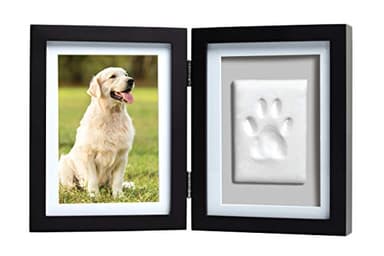
Pearhead Paw Print Frame & Clay Imprint Kit

Pearhead Paw Print Frame & Clay Imprint Kit

A wooden frame holding a photo beside a no-bake clay paw print you take yourself. It is the one keepsake that can only be made while the dog is still here, which is exactly why it belongs in a gift for someone whose dog is failing.

A keepsake made while there's still time
$19.99 · View on Amazon

Price as of September 17, 2026. #ad How we’re funded

2
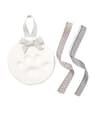
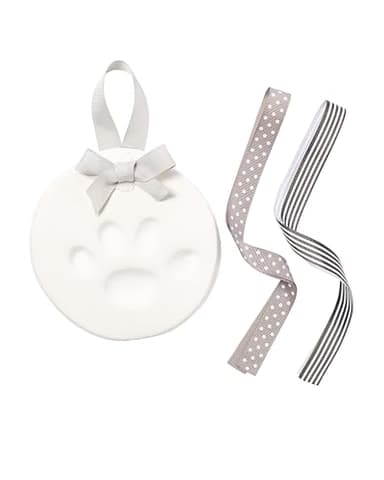
Paw-Print Keepsake Ornament Kit

Paw-Print Keepsake Ornament Kit

A DIY clay kit that captures the dog's actual paw print as a keepsake ornament — the most personal thing under $10 on this list. A lovely first-Christmas or memory gift.

The most personal under-$10
$9.62 · View on Amazon

Price as of September 17, 2026. #ad How we’re funded

3
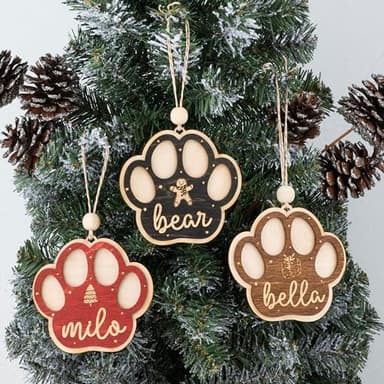
Engraved Wooden Paw Ornament with the Dog's Name

Engraved Wooden Paw Ornament with the Dog's Name

A laser-cut paw with the dog's name engraved into it, offered in three wood colors and a choice of small icons. It is the answer when you cannot get hold of a photo without spoiling the surprise — all it needs is a name you already know.

When you can't get a photo
$9.95 · View on Amazon

Price as of September 17, 2026. #ad How we’re funded

Every pick, in full

Pearhead Paw Print Frame & Clay Imprint Kit
1A keepsake made while there's still time

Pearhead Paw Print Frame & Clay Imprint Kit

A wooden frame holding a photo beside a no-bake clay paw print you take yourself. It is the one keepsake that can only be made while the dog is still here, which is exactly why it belongs in a gift for someone whose dog is failing.

Why it’s a great gift

  • Photo and paw print together in one frame
  • No-bake clay — no oven, no fuss
  • Takes about ten minutes at home

Keep in mind

  • Has to be done while the dog is alive
  • One print per kit — no second try
$19.99 · View on Amazon

Price as of September 17, 2026. #ad How we’re funded

Paw-Print Keepsake Ornament Kit
2The most personal under-$10

Paw-Print Keepsake Ornament Kit

A DIY clay kit that captures the dog's actual paw print as a keepsake ornament — the most personal thing under $10 on this list. A lovely first-Christmas or memory gift.

Why it’s a great gift

  • Captures their real paw print
  • Name-brand, well reviewed
  • Under $10

Keep in mind

  • Requires a cooperative dog + a little effort
$9.62 · View on Amazon

Price as of September 17, 2026. #ad How we’re funded

Engraved Wooden Paw Ornament with the Dog's Name
3When you can't get a photo

Engraved Wooden Paw Ornament with the Dog's Name

A laser-cut paw with the dog's name engraved into it, offered in three wood colors and a choice of small icons. It is the answer when you cannot get hold of a photo without spoiling the surprise — all it needs is a name you already know.

Why it’s a great gift

  • Needs one word you already know, not a photo hunt
  • Three colors plus icon options, so it can match their tree
  • Nothing to approve — no proof, no upload, no crop

Keep in mind

  • A name is less of a gut-punch than a face
  • Engraved wood is subtle and can disappear on a busy tree
  • Check the spelling before you submit — engraving is final
$9.95 · View on Amazon

Price as of September 17, 2026. #ad How we’re funded

How to make a clay paw print, step by step

  1. 1

    Set up before you fetch the dog

    Pick a spot on the floor where the dog is comfortable, wash your hands, and put the clay on a clean, hard surface you can pick up, such as a dinner plate or a clipboard. The veterinary ClayPaws instructions say to clean hands and paws first because the clay picks up fur and dirt, and to recruit a helper, since some pets have sensitive paws and resist.

  2. 2

    Get the paw ready

    Wipe the paw clean. If your dog has long fur around the pads, trim it back so the pads show clearly; the ClayPaws FAQ suggests trimming and washing the paw before you begin. Pearhead's instructions for its clay paw-print kits add one more step: wet the paw just before you press it.

  3. 3

    Knead and roll the clay

    Knead until the clay is soft and smooth. Pearhead suggests a minute or two to work out the air bubbles, and ClayPaws warns against softening clay in the microwave. Roll it into a smooth disc about half an inch thick, the thickness Rover Veterinary Care suggests, so the toes have room to sink in.

  4. 4

    Bring the clay to the paw and press

    Lift the clay up to the paw rather than moving the dog; ClayPaws notes this is usually easier, especially if the dog is lying down. Press the center pad in firmly but gently, then, without lifting the paw, press each toe pad in turn. Ease the nails free and lift the paw straight up in one smooth motion, then wipe the paw clean.

  5. 5

    Check it, then shape it

    If the print is shallow or smudged, ball the clay up and try again while it is still soft; the ClayPaws guidance is simply to start over. Once you are happy with it, cut the shape (Pearhead's kits include a shaping ring for this), poke a ribbon hole with something about the width of a pen, and scratch in the dog's name or the date with a toothpick if you like.

  6. 6

    Let it dry, or bake it

    Air-dry clay needs time: Pearhead recommends 24 to 48 hours in an open spot at room temperature, and Rover Veterinary Care notes that thickness and humidity change how long it takes. Oven-bake clay follows its own package directions; ClayPaws, the clay many veterinary hospitals use for prints, bakes at 275°F for 20 minutes. Paint only once the piece is completely dry, and Pearhead advises a non-toxic, water-based paint.

A kit makes one finished keepsake, so take your time over the press. Soft clay can be re-rolled and tried again, but once it starts to set you are committed. If other family members will want one too, either buy a kit each or take an ink print in the same session and make copies of that.

Plan where it will live before you start. Cut the shape to suit the finished piece: a round with a ribbon hole for an ornament, or a shape that fits the opening if it is going into a frame. It is much easier to decide while the clay is soft than to trim it once it has dried.

Using homemade salt dough? Read this first

Salt dough — flour, salt and water — is the classic homemade version, and plenty of craft and pet sites share a recipe. The Honest Kitchen’s, for example, uses one cup of flour, one cup of salt and half a cup of water, baked at 200°F for two to three hours, and warns that overcooking can make it crack. As a craft, it works. The problem is the salt.

VCA Animal Hospitals says salt dough ornaments contain enough salt to cause serious health problems, including vomiting and high sodium levels in the blood that can lead to seizures, and advises calling your vet if a pet eats even a small piece. Pet Poison Helpline says as few as one or two ornaments could make a dog very sick, and that baked dough can also be hard to digest. The ASPCA adds that pets may mistake salt-dough crafts for treats.

If you still want to use it, take these precautions:

  • Keep the dog out of the room while you mix and roll. Pet Poison Helpline advises keeping pets away while crafts are being made. Bring the dog in only for the press, then wipe the paw clean straight away.
  • Dry and store it up high. Pet Poison Helpline suggests drying pieces somewhere pets can’t pull them off a counter and hanging ornaments on a tall, sturdy branch. VCA says to keep them out of reach even years later.
  • Know who to call. If your dog eats any, contact your vet or an animal poison line such as the ASPCA Animal Poison Control Center or Pet Poison Helpline right away.

The simpler answer is a kit. Pet Poison Helpline itself points to craft kits as the safer alternative, and Pearhead says its clay is made from materials that won’t harm a pet if eaten — although it still doesn’t recommend letting a pet play with the clay unsupervised.

How to make an ink or paint paw print

  1. 1

    Choose a pet-safe ink or paint

    Use a nontoxic, washable ink pad or nontoxic washable paint, which is what the American Kennel Club's paw-print craft calls for; Rover Veterinary Care recommends pet-safe ink pads. On craft paint, the ASPCA says an AP (Approved Product) seal means the product is not toxic, while a CL (Cautionary Labeling) seal means you should call your vet if your dog swallows it.

  2. 2

    Set up for mess

    The AKC suggests doing this outside on a yard or deck if you can, or putting down an old sheet or towels indoors. Have several sheets of cardstock or good-quality paper ready, a damp cloth or pet wipe within reach, and treats in your pocket.

  3. 3

    Start with a clean, dry, trimmed paw

    Rover Veterinary Care's advice is to make sure the paw is clean and dry and to trim any long fur around the pads, which otherwise blurs the print.

  4. 4

    Coat the pads evenly

    Press the paw gently onto the ink pad, or dip it into paint spread on a plate, so that every pad is evenly covered.

  5. 5

    Press straight down, then lift straight up

    Set the paw on the paper and press down evenly over the whole paw without letting it slide, because movement is what smudges a print. Lift straight up. Take a few prints on fresh sheets so you can keep the best one.

  6. 6

    Clean the paw right away

    Wipe the paw immediately with a damp cloth or a pet-safe wipe, as Rover Veterinary Care advises, and make sure all the ink or paint is off; the AKC's instructions say the same. Then treat and praise.

  7. 7

    Let it dry before framing

    Give the print time to dry before you frame or scan it. Pearhead recommends 24 to 48 hours of air-drying for its ink keepsakes.

Paper, cards or canvas. The AKC’s version works on paper, blank cards or canvas, and then turns the prints into flowers by drawing stems and leaves around them once they are dry. That is a nice way to make something to give rather than something to file away.

No ink at all: inkless wipe kits. These use a treated wipe on the paw and special printing cards; the print develops on the card, and there is no ink on the dog. One maker, Forever Fun Times, describes its kit as needing no clean-up and no soap. The trade-off is that the print only appears on the special cards in the box, so you are limited to however many come in the kit.

Getting your dog to cooperate

Most of the effort in a paw print goes into handling the dog, not the materials. None of this needs training, just a little planning.

Recruit a second person. One of you steadies and reassures the dog; the other handles the paw and the clay or paper. The ClayPaws instructions recommend recruiting help for exactly this reason: some pets have sensitive paws and resist.

Pick a settled moment. A dog who has just come back from a long walk or finished dinner is easier to work with than one who has just heard the doorbell. If the dog is lying down, leave them there and bring the materials to the paw; ClayPaws notes that is usually easier than moving the animal.

Get them used to paw handling first. The AKC’s guide suggests teaching paw-handling skills beforehand. For a few days, touch and gently hold each foot, then reward. On the day, treat and praise after every impression, as the AKC recommends.

Keep it short, and know when to stop. Have everything open and ready before the dog arrives so the actual pressing takes seconds. If the dog is pulling hard or getting worried, stop and try another day. A slightly smudged print is fine; a dog who now dreads having their feet touched is not.

Puppies are wriggly but worth it. Small paws take a small amount of clay or ink, and the print records a size the dog will never be again. It is one of the nicest things to make, or to give, in the first weeks — our new puppy gift guide has more ideas for that moment.

Clay vs ink: how they compare

There is no single winner, because the two methods make different things. Here is how they stack up on the points that actually decide it.

  • What you end up with. Clay makes a three-dimensional object you can hold, hang or set in a frame. Ink or paint makes a flat image on paper or canvas.
  • Detail. A guide from Funeral.com puts it neatly: ink is often the best choice for the crispest “map” of the paw, while clay shows depth better but also shows mistakes more clearly.
  • Copies. Ink wins easily. The same guide calls it the easiest method for making duplicates, and a flat print can be framed, scanned, reduced for a locket or used as the basis for engraving. A clay print is a one-off, though families sometimes photograph it in strong, angled light to use for artwork.
  • Mess. A no-bake clay kit is the tidier job; Pearhead describes its kits as no mixing, no baking and no mess. Ink and paint are messier, which is why the AKC suggests working outside or on old towels. Inkless wipe kits are the cleanest of all.
  • Time. The dog’s part takes minutes either way. Air-dry clay then needs 24 to 48 hours before you can hang or paint it, and an ink print needs time to dry before framing.
  • Durability. An ink print on good cardstock needs only a frame. Clay needs more care: Funeral.com notes that many families apply a clear sealant to protect it from humidity and fingerprints, and ClayPaws advises a glaze made for polymer clay and warns against spray paint. One in-home euthanasia practice, Faithful Hearts Vet, goes further and tells families to choose baking clay over air-dry clay, warning that cheaper air-dry clays can crumble over time. An air-dry kit is still the easiest way to do this at home; just keep the finished piece indoors and handle it gently.

The short answer: clay for a keepsake to hold, ink for anything you want to reproduce. When it really matters, do both.

When the print can’t wait

For most dogs there is no hurry, and a paw print can be a relaxed weekend project. For an old or seriously ill dog, there is a clock on it, because it is the one keepsake that has to be taken from the dog in person. If you are buying for someone in that situation, a kit handed over with “I thought you might want to do this while she’s still here” is a kindness, not a morbid gift. Our guide to gifts for a friend whose dog is ill covers what else helps during that stretch.

Make it easy on a tired dog. Let them stay where they are comfortable, bring the clay or paper to the paw, keep the session short, and have someone there to help. Nobody needs a perfect print; they need one that is theirs.

If the dog has already died, you may not have missed the chance. Veterinary Wisdom, which makes the ClayPaws clay, says making clay prints during or after a euthanasia appointment has been standard practice at many veterinary hospitals for decades. Some in-home euthanasia vets include a print with the visit — Faithful Hearts Vet, for example, includes an ink print or a foam impression — and some pet crematoriums include paw print impressions with a private cremation, as Peaceful Pets does. Funeral.com’s guide notes that you can usually request a print from a vet clinic or a cremation provider as part of aftercare. So ask, both before an appointment and afterward, whether one has already been taken. Our pet memorial ideas guide covers what else is worth doing soon and what can safely wait.

Turning a paw print into a gift

A print on its own is a keepsake. A print with a little thought around it becomes a present. A few ways to get there:

Frame it beside a photo. This is why the frame kit is our top pick: the print and a favorite picture sit together in one finished piece. Choose a photo of the dog with their person rather than the dog alone, if you have one.

Hang it on the tree. A clay print cut as a round with a ribbon hole becomes an ornament that comes out every December. If you would rather not take a print, our guide to ornaments made from a photo, a name or a paw has the alternatives side by side.

Mark a beginning. A first-weeks print for a new puppy, or a newly adopted adult dog, is a lovely thing to add to a welcome gift, and the size difference a year later is half the charm. Pair it with something from the new puppy gifts list.

Make it wearable or permanent. A clean ink print is the starting point for jewelry and engraving, because the maker needs a flat image to work from. Scan it at a high resolution and keep the original safe. Our guide to personalized memorial keepsakes covers engraved and custom pieces, and memorial jewelry covers the pendants and charms.

Pair it with a portrait. A print records the foot; a portrait records the face. Hung together, they make a more complete picture of the dog than either alone. If you are going that route, our guide to custom dog portrait styles helps you pick a look, and how to order a custom dog portrait walks through the photo, the size and the timing.

Or give the kit, not the print. When the dog isn’t yours, the gift is the kit plus the offer: “I’ll hold her if you do the pressing.” Tucked into the box with a card, that offer is often worth more than the kit.

Sources

The steps, drying times, temperatures and safety notes on this page come from these sources, consulted in September 2026. Always follow the instructions that come with your own kit or clay.

More dog gift guides

Related guides

  • Custom Dog Portraits

    How to give a custom dog portrait that lands — canvas, watercolor and photo picks, plus how to order one in time.

  • Dog Lover Jewelry & Necklaces

    Necklaces, bracelets and earrings for dog lovers — from a safe dainty paw pendant to a custom piece made from their own dog.

  • Custom Dog Mugs & Apparel

    Photo mugs, sweatshirts and tees printed with their actual dog — the everyday custom gifts they'll use and wear.

  • How to Order a Custom Dog Portrait

    A simple step-by-step for ordering a custom dog portrait that lands — which photo to send, which style to pick, and when to order.

  • Custom Dog Photo Gifts

    Photo gifts made from their dog's picture — blankets, pillows, mugs, socks and canvas — the personalized picks that get the biggest reaction.

  • Custom Dog Portrait vs Photo Blanket

    Custom portrait or photo blanket? An honest side-by-side on which personalized gift lands best, for whom, and at what budget.

Dog paw prints: common questions

What is the easiest way to make a dog paw print at home?

It depends on what you want at the end. For something to hold or hang, a no-bake clay kit is the easiest route: it comes with the clay and tools, needs no oven, and air-dries in a day or two. For a flat print to frame or copy, a nontoxic washable ink pad and some cardstock take only minutes. If the dog is settled and you have a helper, do both in the same session.

What ink is safe to use for a dog's paw print?

Use a nontoxic, washable ink pad or nontoxic washable paint. That is what the American Kennel Club's paw-print craft calls for, and Rover Veterinary Care recommends pet-safe ink pads. On craft paint, the ASPCA says an AP (Approved Product) seal means the product is not toxic. Whatever you use, wipe the paw clean straight away so there is nothing left for the dog to lick off.

Is salt dough safe for a dog paw print?

The dough itself is the risk. VCA Animal Hospitals says salt dough contains enough salt to cause serious health problems, and Pet Poison Helpline says as few as one or two ornaments could make a dog very sick. If you use it, keep the dog away while you mix it, wipe the paw right after pressing, and dry and store the finished piece well out of reach. If your dog eats any, call your vet or a pet poison line right away. A clay kit avoids the problem.

Clay vs ink: which paw print is better?

Neither is better overall; they make different things. Clay gives a three-dimensional impression you can hold or hang as an ornament. Ink gives the crispest outline of the paw and is the easiest to copy, frame, scan, shrink for a locket or use for engraving. If you can only manage one, choose by what you want to do with it. If you can manage both, do the clay first and an ink print straight after.

How long does a clay paw print take to dry?

Air-dry clay generally needs 24 to 48 hours. Pearhead recommends that window for its clay kits, in an open spot at room temperature, and Rover Veterinary Care notes that thickness and humidity affect it. Oven-bake clay is much quicker but follows its own package directions. Wait until the piece is completely dry before painting or sealing it.

Can I still get a paw print after my dog has died?

Often, yes. Making clay paw prints during or after a euthanasia appointment has been standard practice at many veterinary hospitals for decades, some in-home euthanasia vets include a print with the visit, and some pet crematoriums include paw print impressions with a private cremation. Ask your vet or the cremation provider, including whether a print has already been taken.

Rather buy the finished keepsake?

Our personalized dog gift guides cover ornaments, portraits and keepsakes made from a photo or just a name, with live prices.