A dog DNA kit is one of the few gifts that is not finished when it is opened. The swab goes off in the post, and a few weeks later the recipient gets a second present they did not have to wrap: the answer to a question they have been guessing at for years.
We have not run these kits ourselves, and this is not a lab review. It is a gift-buyer’s review: what the Embark listings actually promise, which of the two kits to give, what will happen in the four weeks after the paper comes off, and the three kinds of recipient who should be given something else. Every figure below is quoted from Embark’s own listing, with the brand’s name attached, because the claims in this category are competitive and we are not in a position to adjudicate them.
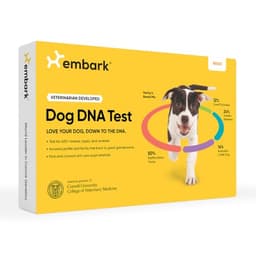
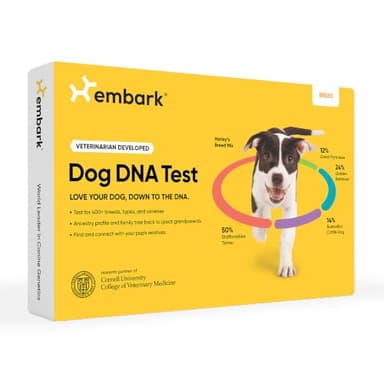
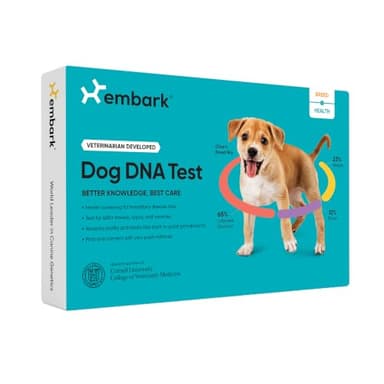
What you get: a cheek swab, a prepaid return mailer and an online account where the report appears. The Breed ID listing states 400+ breeds, 99% breed accuracy, ancestry back to great-grandparents, a family tree and a relative finder. The Breed & Health listing adds screening it puts at 270+ health risks, 55 physical traits, allergy risk scores across four allergy types and a genetic cancer risk score, and says results can be shared with a vet from the app.
Who it is perfect for: the rescue-dog owner. “What is he?” is a question these households field from strangers weekly, and Embark’s pitch is specifically the ancestry side of the answer rather than a breed percentage alone — the relative finder is the feature people actually post about, because finding a cousin or a sibling is a story. For the person who “has everything,” an unfolding reveal is something a physical object cannot match.
Where to think twice: three cases. A papered purebred owner already has the answer on a certificate. An anxious owner handed a list of genetic health risks has been given a worry in a gift box. And a multi-dog household cannot use one kit without picking a favorite. In all three, buy something else — there are alternatives below.
The verdict: an excellent gift for a curious or rescue-dog owner, and the best answer we know to “they have everything.” Give the Breed ID version unless you specifically know they want the medical half; it is the cheaper kit, it carries the fun, and Embark’s listing says health insights can be unlocked in the app later, so the recipient can upgrade on their own terms. If you are weighing Embark against the other big name, our Embark vs Wisdom Panel comparison puts all four kits in one table, and our Wisdom Panel review is the matching write-up for the cheaper route in.
Breed ID or Breed & Health: which to give
This is the only real decision, and most gift buyers get it wrong by spending more.
Breed ID is the gift. It carries everything that makes a DNA kit fun to receive: the breed makeup, the ancestry back to great-grandparents, the family tree, the relative finder. Nothing in it can land badly. It is the cheaper of the two and the one we would give nine times out of ten.
Breed & Health is a tool, not a toy. The screening its listing describes — 270+ health risks, allergy risk scores across four allergy types, a genetic cancer risk score, 55 traits including predicted adult size and coat type — is genuinely useful to an owner who will take it to their vet and act on it. Given to someone who would read every result as a prognosis, it is a bad gift wearing a generous price tag.
The test for which one is simpler than it looks: has this person ever told you about a conversation they had with their vet? If yes, the health kit is a real present. If their relationship with the vet is “we go once a year and I hate it,” give Breed ID.
There is a third option people forget. For a puppy, the health kit’s trait predictions are the most actionable thing in this whole category — predicted adult size, coat type and shedding level are precisely what a new owner is guessing at when they buy a crate, choose a food or book a first groom. Our new puppy gifts guide covers the rest of that moment.
How to wrap a gift that is not finished yet
Both Embark listings say results generally land two to four weeks after the swab is mailed back. Add the recipient’s own procrastination and the real gap between unwrapping and knowing is closer to a month. That is a feature and a problem at the same time, and it is worth planning for.
The problem: a box with a cotton swab in it is an anticlimax in a room full of people opening presents. There is nothing to use, wear or eat, and explaining what it is takes longer than opening it.
The fix, and it is a good one: pair it. Give the kit with one small thing that works immediately — a photo keychain of the dog is the cheapest version and lands on the same theme, or a bag of the treats the dog already likes. The keychain is opened, held and kept; the kit is the thing that arrives again in February.
And say what it is on the card. One line does it: “Swab him, post it, and in a few weeks we find out what he actually is.” Written down, the gift explains itself; left to the box, it does not.
One timing note that matters more than it sounds: if the gift is for Christmas, the results will arrive in late January. That is fine, and it is worth knowing if you were hoping for a shared moment over the holidays.
Embark or Wisdom Panel?
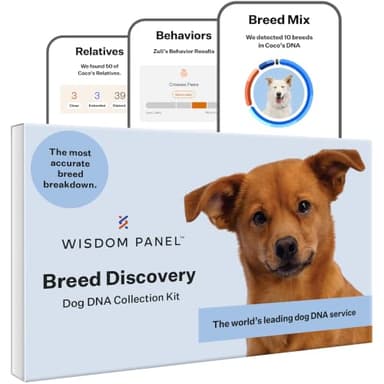
We line up all four kits side by side — breed-only versus breed-plus-health, what each listing claims, and which one to actually give.