There is a particular moment in a dog’s life that nobody sends a card for. The dog hasn’t got ill and nothing has gone wrong — it has just started taking the stairs one at a time, and pausing a beat before it jumps onto the couch, and sleeping through the sound of the mail arriving. Its owner has noticed. They probably haven’t said anything about it.
This page is for buying a gift into that moment. It is deliberately unsentimental, because the gifts that land here are the ones that make an ordinary Tuesday easier for a dog whose body is changing — not the ones that comment on how much time is left. An old dog does not need a keepsake. Its owner does not need reminding.
Every pick below had to answer three questions before it went on the list.
One: does it solve a problem this dog already has? Senior dog gear covers everything from a slightly softer bed to a full mobility harness, and most of that range is wrong for a dog that is merely older. Buying too far ahead of where a dog actually is turns a present into a prediction. Each write-up says which specific change it addresses — slipping, jumping, bending, feeling the cold — so you can match it to what you have actually seen with your own eyes.
Two: can you buy it without measurements you don’t have? This is the question that decides the whole ranking, and it is the one most senior-dog lists ignore. You are buying for somebody else’s dog. You cannot ask for its weight and paw width without giving the game away, and half the products in this category are useless if you guess wrong. So the list runs from “fits almost any dog” at the top to “needs a real measurement” at the bottom, and the top pick is the adjustable bowl stand precisely because adjustability removes the guess.
Three: does it make the owner feel helped rather than warned? The same object can read either way depending on how it arrives. Grip socks handed over with “I noticed she skids on your kitchen floor” are thoughtful. The same socks with a long, careful silence attached are something else. Nothing on this page requires the owner to admit anything out loud, which is deliberate — there is a section further down on how to hand these over.
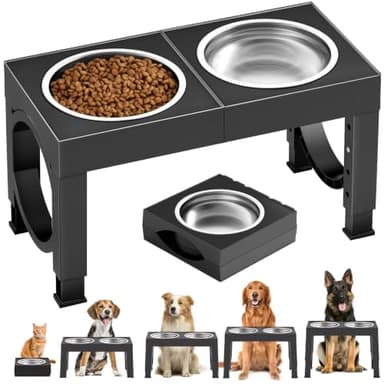
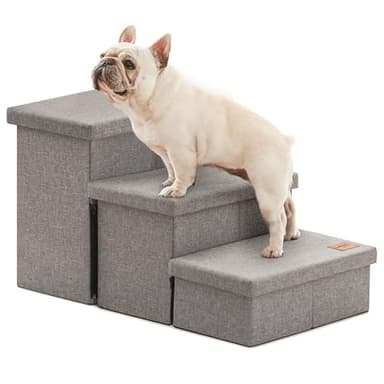
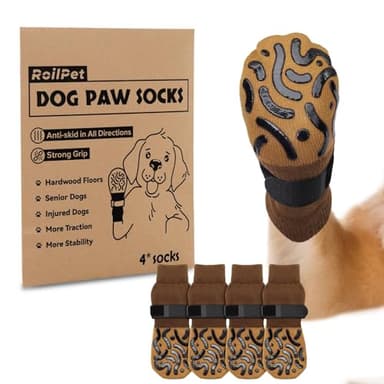
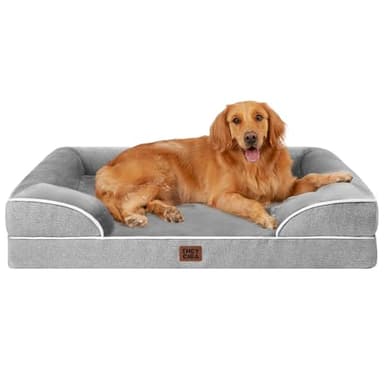
Our top pick is the adjustable elevated bowl stand: it fixes the most repeated small discomfort in an old dog’s day, it locks at five heights so you don’t need to measure anything, and it costs less than dinner. The foldable steps are the pick if the dog has stopped getting onto the furniture it has slept on for a decade. The grip socks are the cheapest fix for the most frightening problem, which is a dog that has started to slide on hard floors. And the orthopedic bed is the one nobody buys themselves and everybody is glad to have.
Most of this list sits in the under-$25 band and none of it reaches the splurge tier; prices are pulled live rather than typed in by us, so what you see is current. If the dog in question is young and this is the wrong end of the shelf entirely, our gifts for the dog guide covers treats and toys for all ages, and new puppy gifts covers the opposite end of the same life.
What changes for an old dog, and which gift it points to
If you are not sure which of these to buy, work backwards from the thing you have actually noticed. Each of the common late-life changes has one obvious answer on this page, and buying the answer to a change you have seen is always better than buying the most expensive item on the list.
The floors get slippery. This is usually the first visible change and the most alarming to watch. Worn paw pads and weaker back legs turn hardwood and tile into an ice rink, and a dog that has slipped once starts moving nervously everywhere. Grip socks are the direct fix. Rugs along the routes the dog uses most are the free one, and worth mentioning when you hand the socks over.
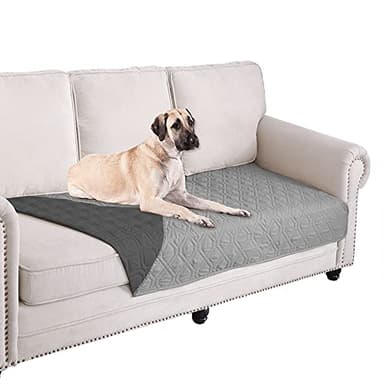
Jumping stops. A dog that has slept on the couch its whole life and now stands beside it looking up is asking for steps. This one matters more than it sounds: the alternative is either the dog being lifted every time, which many dogs hate, or the dog quietly giving up a place it loves.
Eating from the floor gets uncomfortable. Bending down to a bowl is a small movement repeated several times a day, which is exactly the kind of thing a stiff neck and shoulders notice. Raising the bowls is the least dramatic change on this page and probably the most repeated benefit.
Sleep gets longer and sorer. Old dogs sleep a great deal more than young ones, so the surface they sleep on stops being furniture and starts being where they live. Memory foam rather than loose stuffing is the difference, because stuffing packs down to nothing exactly where the dog is heaviest.
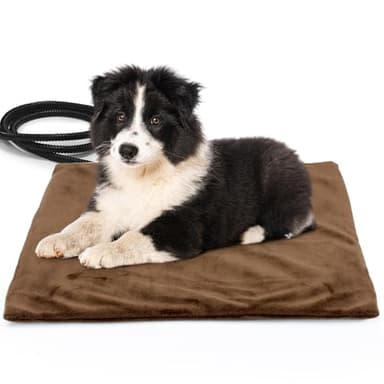
They feel the cold. Less muscle, thinner coat, more time lying still. A low, constant warming pad turns a cold room into a comfortable one for very little money — but it has to go on a bed big enough that the dog can move off it whenever it wants.
Accidents start. Nobody puts this on a wish list, and it is the change most likely to end with a dog being moved off the furniture or out of the bedroom. A waterproof blanket quietly prevents that conversation from happening at all.
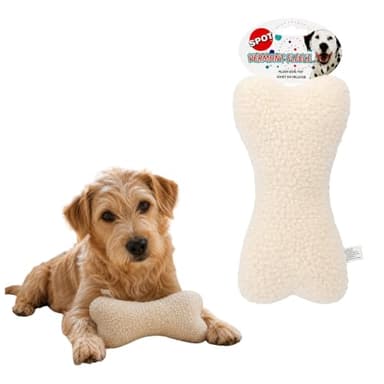
Teeth get fragile. The antlers, hard rubber and bones a dog lived on at three become a cracked-tooth risk at twelve. Swapping to soft plush keeps play in the day without the vet bill.
Buying without measurements
Four of these seven fit almost any dog. The adjustable bowl stand locks at five heights, the steps are rated to 200 lbs and suit small through large, the warming pad works for anything that fits on it, and the soft toy is size-flexible by nature. If all you know is “their dog is getting old,” buy from that group and you cannot get it badly wrong.
Two of them genuinely need a number. Socks need the width of a front paw, which is not something you can infer from the breed — two dogs of the same weight can take different sizes. A bed needs the dog stretched out on its side, nose to tail, plus a few inches; guessing small is the common mistake, because a dog that doesn’t fit will sleep on the floor beside a bed it can’t use.
If you want one of those two and can’t get the measurement, there is an easy way through it: ask a family member rather than the owner. Failing that, give a size-tolerant pick now and mention that you nearly bought the bed — plenty of people would rather choose the size themselves for something that big anyway.
What to skip, and why
Joint supplements and anything else swallowed. This is the most common senior-dog gift and the one to avoid outright. Dosing depends on the dog’s weight, an old dog is often already on medication, and you are not in a position to know about either. It is a vet conversation, not a present. If you want to help medically, offer to cover a check-up.
Lift harnesses and mobility slings, unless you were asked. These are genuinely excellent products for a dog that has lost the use of its back legs, and they are a heavy thing to receive for a dog that is merely stiff. Buying one unprompted tells an owner you think their dog is further along than they do. Wait to be asked, and then buy it immediately.
Anything that says goodbye. Paw-print casting kits, “last Christmas” ornaments, memory books, anything engraved with dates. These are lovely objects in the wrong week. A dog that is slowing down is still a dog that is here, and a keepsake arriving now reads as a verdict. Our gifts for someone whose dog is sick guide is written for the point at which that changes.
Hard chews, antlers and bones. A worn or cracked tooth is one of the most common and most expensive senior dog problems, and the treats that were fine for years stop being fine without any warning. If you want to send something edible, send something soft, and check first that the dog isn’t on a prescription diet — plenty of old dogs are.
A puppy, or a hint about one. It should not need saying and it happens every year. An aging dog is not a gap opening up. Whatever the intention, a puppy-shaped gift lands as a countdown.
Shopping for the dog, not the owner?
Treats, toys and ready-made boxes the dog gets to open — sorted by price, for dogs of every age.